 EV Charger Installation
Tesla Wall Connector Installation
Tesla owners usually choose a Wall Connector or a 14-50 outlet with the mobile connector. Both need a properly sized 240-volt circuit and a clean installation near where you park. The right choice depends on your model, your panel and how fast you want to charge.
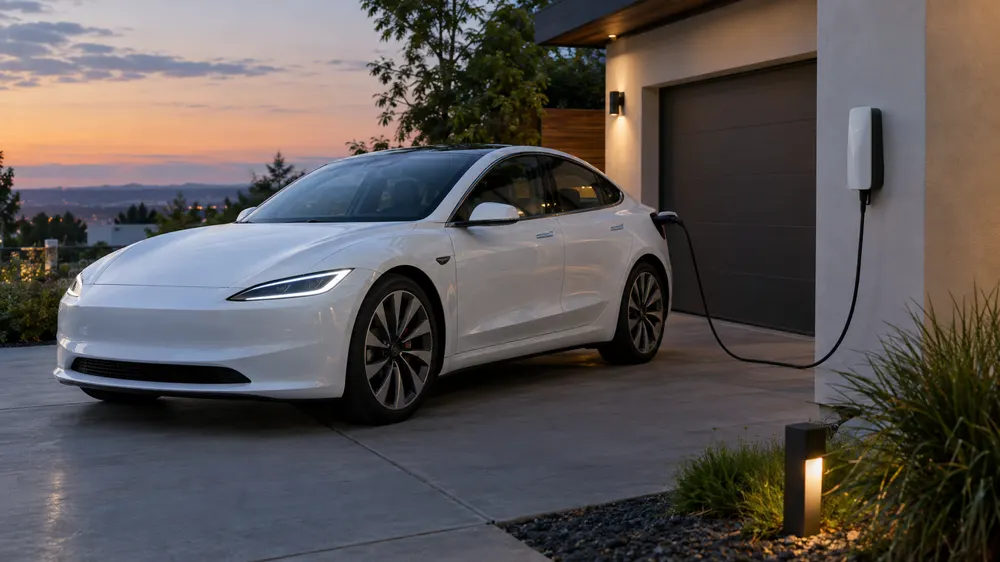
The Wall Connector, in plain terms
Tesla's Wall Connector is a hardwired Level 2 charger designed around Tesla vehicles, and it is one of the most installed home chargers in the country. On a 60 amp circuit it delivers up to 48 amps to vehicles that can accept it, which adds roughly 30 to 40 miles of range per hour on most models. It is slim, weather-rated for outdoor mounting, and its cable management is built in, which keeps a garage wall tidy.
Installation is standard electrical work: a dedicated 240-volt circuit from the panel, correct breaker and wire sizing, and a commissioning step where the electrician sets the unit's output to match the circuit. That commissioning dial matters. A Wall Connector on a 50 amp circuit must be configured for 40 amp output, and the setting is part of a code-compliant install, not a preference.
Charging non-Tesla vehicles
The connector landscape has consolidated around the NACS standard, the Tesla-style plug. Most new EVs sold in North America now ship with a NACS inlet or include an adapter, and Tesla's own Universal Wall Connector adds a built-in J1772 adapter for vehicles with the older inlet. In practice, a household with a Tesla today and a different EV later is well served by a Wall Connector with an adapter kept on the hook. If your second car is a J1772 vehicle and you want zero adapters, a universal charger with a J1772 cable and a Tesla adapter is the mirror-image solution. Either way, one install serves both; tell the electrician what vehicles you have and expect.
Two Teslas, one circuit
The Wall Connector supports power sharing: multiple units on one circuit that split the available current automatically. Two cars plug in at night, the units divide the capacity, and both are full by morning. For a two-Tesla household this avoids a second circuit and often avoids a panel upgrade, at the cost of slower charging when both cars charge at once, which rarely matters overnight.
The NEMA 14-50 alternative
Many Tesla owners skip the Wall Connector and install a NEMA 14-50 outlet instead, using the mobile connector that comes with the car. It charges at 32 amps, plenty for overnight use, the outlet costs less to install, and the mobile connector travels with the car for cabins and campsites. The tradeoff is speed and the convenience of a cable that always stays home.
Costs and timing
Installing a Wall Connector costs about the same as any quality Level 2 install: many jobs fall between $800 and $2,500 all-in, driven by the wire run and panel capacity rather than the brand on the wall. The unit itself is competitively priced among smart chargers. Tesla maintains a list of trained installers, but any licensed electrician can install one correctly, and the commissioning step is documented in the manual. As with any install, plan on the permit and inspection adding days around the work itself, and start the process before delivery day if the car is on order.
Working with an independent electrician
evchargerinstallation.org is a referral service, not a contractor. When you call, we connect you with an independent electrician who serves your area and handles Tesla Wall Connector installation regularly. The contractor inspects your setup, provides a written estimate, pulls the permit where required, completes the work and stands behind it. You pay the contractor directly at a price they set, and the written estimate is the number to rely on. Our role is the first step: making sure one phone call reaches someone local and experienced.
What to have ready when you call
A few details make the first conversation productive. Your ZIP code routes the call. Your vehicle's make and model determines the charging rate the circuit should target. Where you park, garage, driveway or shared lot, shapes the install type. If you know your panel's main breaker size, usually stamped 100, 150 or 200, mention it; a photo of the open panel sent later helps the electrician quote accurately. And if you have a deadline, like a vehicle delivery date, say so up front.
Common questions
Are the contractors independent?
Yes. Every electrician we refer runs an independent business. They set their own pricing, carry their own insurance and are solely responsible for their work.
Do cost figures here apply to my home?
They are rough planning ranges drawn from typical jobs. Your home's panel, wire run and local labor market decide the real number, which is why every estimate here is followed by the same advice: get it in writing from the electrician who sees your panel.
Is the federal tax credit still available?
No. The Section 30C credit for home charging equipment ended for property placed in service after June 30, 2026. State, local and utility programs may still apply and are listed on each state page.
How fast can someone come out?
Scheduling varies by market and season. In most areas an estimate visit happens within days, and the work itself within one to three weeks including permits. Vehicle delivery dates are worth mentioning when you call.
The job, step by step
Knowing the sequence removes most of the anxiety from any electrical project. It begins with the estimate visit or photo review, where the electrician examines the panel, confirms capacity with a load calculation, measures the wire route and talks through equipment options. The written estimate follows, listing the circuit size, materials, equipment, permit fees and labor so the scope is unmistakable. Once you approve, the contractor pulls the permit and schedules the work.
Install day starts with the power to the work area shut off and locked out. The new breaker lands in the panel, wire is pulled along the planned route through conduit or finished framing, and the equipment is mounted, connected and configured. Smart units join your Wi-Fi and get their scheduling set. The electrician then tests the circuit under load, verifies voltage and polarity, labels the panel and walks you through operation and basic care. The inspection closes the loop on the city or county's schedule, usually within days, and the documented, permitted circuit becomes part of the house.
After the work, a few habits protect the investment. Keep the permit record and the invoice with your home documents; insurers and future buyers both ask for them. Register the charger with the manufacturer for warranty coverage. Check the unit monthly for damage or error lights, and set the charging schedule to match your utility's cheapest hours if a time-of-use plan is available. That is the whole ownership routine for a device that will likely outlast the car it charges.
Planning checklist
Before the first call, a short list keeps everything moving. Confirm where the vehicle will park most nights and measure the rough distance to the electrical panel. Note the panel's main breaker size and whether open slots are visible. Check your utility's website for EV rates and charger rebates, since some programs require approval before installation. If you rent or answer to an association, review the approval process early, because it usually takes longer than the electrical work. Think about whether a second EV is likely in the next few years, since planning for it now is nearly free. Finally, decide on a rough budget and remember that cost figures on this site are planning ranges, not quotes.
When the electrician visits, three questions are always worth asking: what does the load calculation say, what would change the price, and is there anything you would do differently if this were your house. The answers tend to be short, specific and genuinely useful.
One call, nationwide
This site serves more than 28,000 cities across all 50 states and the District of Columbia, and the process is the same everywhere: call the number at the top of this page, share your ZIP and your vehicle, and get connected with an independent electrician in your area who handles Tesla Wall Connector installation. Availability varies by location, and the agent who answers will tell you straight whether there is an installer near you. In most metro and suburban areas the answer is yes, often with same-week estimate visits.
If you are still in the research stage, the state pages here collect the incentives, utility programs, registration fees and electricity rates that shape what charging costs where you live, and the city pages add local detail on housing stock and permits. When research turns into a decision, the phone number is on every page.
The bottom line
Most Tesla Wall Connector installation questions resolve into a short list: get the panel checked, get the scope in writing, pull the permit, and hire someone licensed who does this work every week. The technology is proven, the process is routine for a good electrician, and the result is the part of EV ownership people actually notice, a car that is always ready. When you are ready to move from reading to doing, call the number at the top of the page and we will connect you with an independent electrician near you.
Wall Connector or 14-50 outlet
The Wall Connector is a purpose-built wall unit. It charges faster than a 14-50 outlet on most setups and has a tidy cable that stays on the wall. The 14-50 outlet with the mobile connector is cheaper up front and lets you take the cable with you.
Many owners start with a 14-50 outlet and add a Wall Connector later. Because both can share the same wire when the circuit is sized correctly, the outlet is not a dead end.
What your model can use
Different models accept different maximum rates at home. Long range cars generally benefit from a 60 amp circuit and a 48 amp Wall Connector. Shorter range models see little extra benefit past 32 or 40 amps.
Check your owner's manual or app for your maximum charge rate before buying equipment.
Power sharing and multiple cars
If you have two EVs, a Wall Connector that supports power sharing can feed both from one circuit. This often avoids a panel upgrade.
Your electrician can confirm what your panel supports.
FAQ
Do other EVs work with a Tesla Wall Connector?
Many newer connectors and adapters allow it, but check compatibility for your car before buying.
Wall Connector or 14-50 outlet?
The Wall Connector is faster and tidier. A 14-50 outlet is cheaper and flexible. Your electrician can price both.
How many amps do I need?
Most Teslas charge well on a 40 to 60 amp circuit. Long range models benefit from the higher end.
Do I need Wi-Fi at the charger?
Wi-Fi is optional but enables software updates and usage reporting for some units.
Can I install it outdoors?
Many units are rated for outdoor use. Check the weather rating and ask your electrician about mounting.