 EV Charger Installation
Nationwide referral service
EV charger installation by local electricians, nationwide.
Home Level 2 chargers, Tesla Wall Connectors, panel upgrades and commercial charging. Call to be connected with an independent installer near you.
- Independent local electricians
- 28,049+ cities in 50 states and DC
- Written estimates before any work
Services
EV charger services for every property
Pick the job closest to yours. Each guide covers the steps, rough costs and common questions.
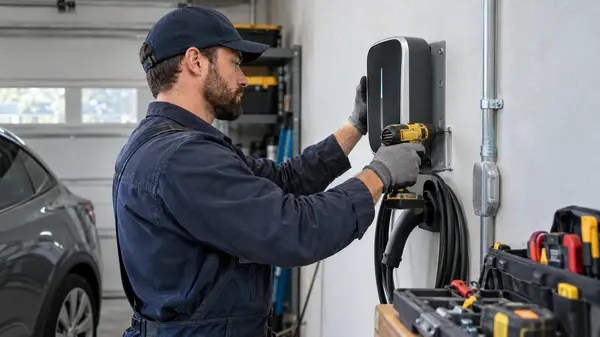
Home EV Charger Installation
A dedicated 240-volt charging circuit at your garage or driveway.
Learn more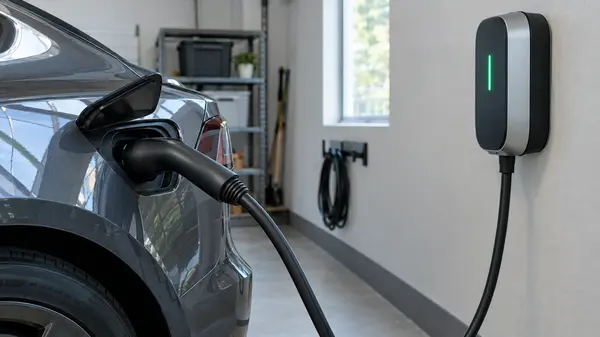
Level 2 Charger Installation
240V charging that adds about 20 to 40 miles of range per hour.
Learn more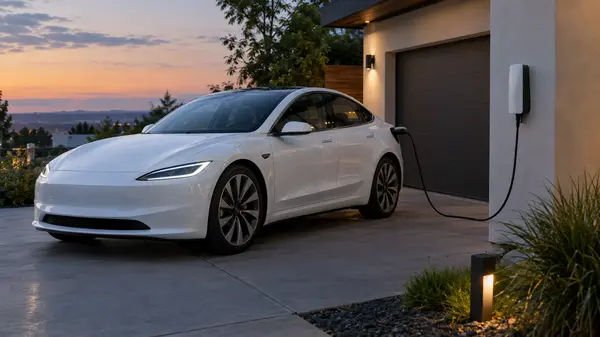
Tesla Wall Connector Installation
Wall Connector or NEMA 14-50 outlet set up for a Tesla.
Learn more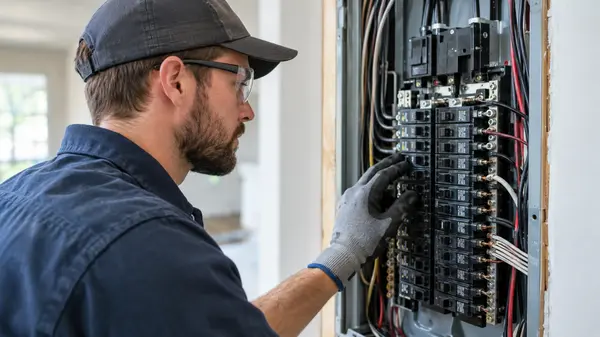
Electrical Panel Upgrade for EV Charging
More panel capacity when your home cannot carry a charger.
Learn more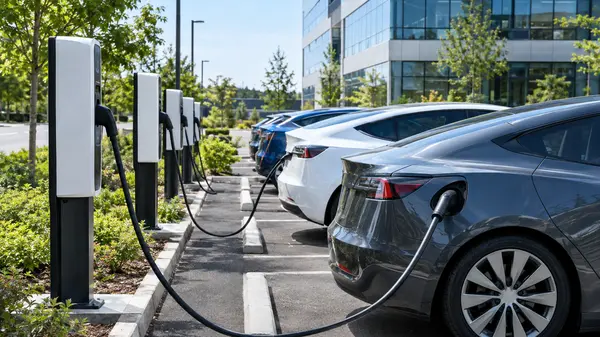
Commercial EV Charging Installation
Chargers for offices, retail, fleets and parking lots.
Learn more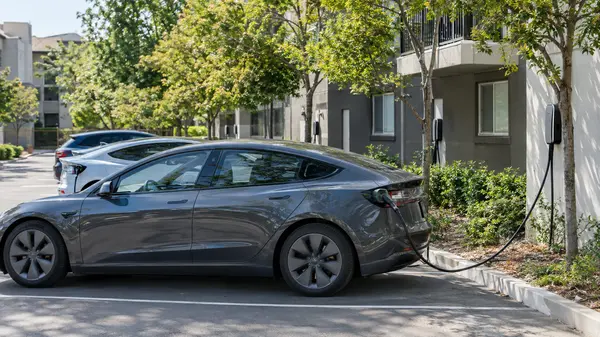
Apartment and Condo EV Charging
Shared parking, HOA and landlord installs.
Learn more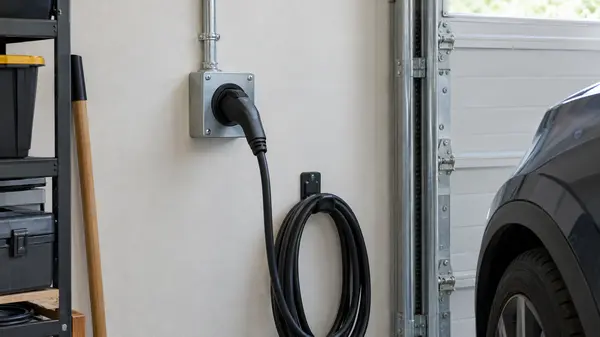
NEMA 14-50 EV Outlet Installation
A 240V outlet for a portable charging cable.
Learn more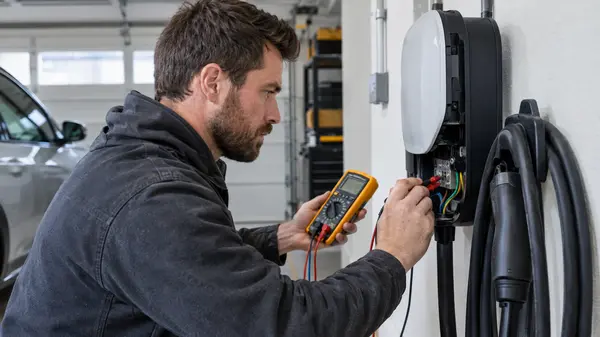
EV Charger Repair and Replacement
Tripped breakers, dead units and old chargers.
Learn more
How it works
From first call to a charged car
- Call the referral line. Share your ZIP, your vehicle and where you park.
- Get connected. We route you to an independent electrician who serves your area.
- Get an on-site estimate. The contractor checks your panel and wire run, then gives you a written price.
- Install and inspection. The contractor installs the charger and handles the permit where required.
Know before you call
What affects the cost of an EV charger install
Wire distance
The run from your panel to the charger drives labor and materials. A garage next to the panel is the easy case.
Panel capacity
If the panel has room, it is a breaker. If not, load management or an upgrade may be needed.
Charger choice
Match amperage to your car. Higher output only helps if your car can accept it.
Permits
Most areas require a permit and inspection. Fees and timing vary by city and county.
Rough guide: many home installs run about $800 to $2,500 including the charger. This is an estimate, not a quote.
Charging levels
Level 1, Level 2 and DC fast charging
| Type | Power source | Typical speed | Best for |
|---|---|---|---|
| Level 1 | Standard 120V outlet | About 3 to 5 miles per hour | Short daily drives |
| Level 2 | Dedicated 240V circuit | About 20 to 40 miles per hour | Home, work and apartment parking |
| DC fast | High-power public equipment | Large share of range in 20 to 40 minutes | Road trips and public stations |
Speeds are rough and vary by vehicle and charger. Read the full comparison.
Nationwide coverage
EV charger installation in 28,049+ cities
From major metros to small towns, find your city and see what a local install involves, what permits to expect and which services fit your property.

Find your state
Choose your state
Guides
Plan your install
How Much Does EV Charger Installation Cost in 2026?
What drives the cost of installing a home EV charger, with rough ranges and what to ask contractors.
Level 1 vs Level 2 vs DC Fast Charging
The three charging levels, how fast each adds range, and which one fits home, work and road trips.
Does My Electrical Panel Need an Upgrade for an EV Charger?
How electricians check panel capacity, and when load management can avoid a full upgrade.
What EV charger installation actually involves
Installing a home EV charger is electrical work, not appliance delivery. The job starts at your electrical panel, where the electrician checks capacity and finds space for a new double-pole breaker, usually 40, 50 or 60 amps. From there, properly sized copper wire runs through conduit or finished walls to the parking spot, where the charger is hardwired or a 240-volt outlet is mounted. The circuit gets GFCI protection where the code requires it, the breaker and wire are matched to the charger's draw, and the whole job is inspected against the National Electrical Code, including Article 625, which covers EV supply equipment.
A straightforward install, panel in the garage and charger on the same wall, takes a few hours. Longer runs across a basement or attic, trenching to a detached garage, or a panel upgrade can stretch the job to a full day or two. The permit and inspection add calendar time, typically a few days to a few weeks depending on the city, and the electrician normally handles that paperwork for you.
What you get at the end is simple: plug in when you park, wake up to a full battery, and stop thinking about public charging except on road trips.
Home charging costs in detail
Two different costs matter. The first is the install itself. Many straightforward home installs fall between about $800 and $2,500 including the charger, with the wire run, panel capacity, amperage and local labor rates doing most of the deciding. A NEMA 14-50 outlet for a portable cable sits at the low end; a hardwired 48 amp smart charger with a long wire run sits higher; a panel upgrade or trenching pushes the total above that range. These are rough figures, not quotes. The written estimate from the electrician who has seen your panel is the number to trust.
The second cost is the electricity. At the 2025 national average residential rate of roughly 17 cents per kWh, driving on home charging costs about $5 to $6 per 100 miles, and a typical driver covering 1,000 to 1,200 miles a month adds around $55 to $70 to the electric bill. State rates vary widely, from under 12 cents to over 30 cents per kWh, so the same driving can cost half as much in one state and double in another. Many utilities offer time-of-use plans that make overnight charging cheaper, and the smart charger's scheduling feature exists exactly for this. A few dollars of planning at install time, the right rate plan and a scheduled charge, saves money every single night.
Panel capacity, load calculations and load management
The most common surprise in this trade is the panel. Homes with 200 amp service usually have room for a charger circuit. Homes with 100 amp or 150 amp service, especially with electric heat, a range, a dryer and central air, may not. The electrician answers this with a load calculation, a standardized worksheet that adds up the home's demands and shows what the service can spare.
If the numbers are tight, there are three paths. The cheapest is a smaller charger circuit: a 32 amp charger on a 40 amp breaker still adds about 25 miles of range per hour, which covers almost every commute overnight. The middle path is load management, a device that watches the home's total draw and pauses or slows charging when the range and air conditioning run together, letting the charger use capacity that is spare most of the night. The expensive path is a panel upgrade or a service upgrade, which adds cost but also prepares the home for future electric appliances. A good electrician prices the options and lets you choose; be wary of anyone who jumps straight to the upgrade without a load calculation.
Permits, codes and inspections
A new 240-volt circuit is permitted work in most of the country. The electrician pulls an electrical permit from the city or county building department, does the work to code, and schedules an inspection. The inspector checks wire sizing, breaker type, GFCI protection, mounting, labeling and the load calculation. It is routine, and it protects you: permitted work is documented for insurance and for the day you sell the house.
The rules underneath are the National Electrical Code, adopted with local amendments. Article 625 covers the charger itself; other articles cover the wiring methods, grounding and outdoor clearances. Recent code cycles pushed GFCI protection and load management provisions, which is why older online advice sometimes conflicts with what your electrician quotes. Condo and HOA rules layer on top in multifamily buildings, and a growing number of states have right-to-charge laws that limit how associations can respond to a reasonable request.
Incentives: what is left after the federal credits ended
Budget honestly: the federal support for this purchase has wound down. The federal EV purchase credits ended September 30, 2025, and the Section 30C credit for home charging equipment ended for property placed in service after June 30, 2026. If a website still promises you 30% back from the IRS on a charger installed today, that page is out of date.
What remains is state, local and utility money, and it is still meaningful in much of the country. As of November 2026, the U.S. Department of Energy's Alternative Fuels Data Center lists state-level incentives in about half the states, plus hundreds of utility programs: charger rebates, bill credits for off-peak charging, special EV rates and make-ready programs that pay for wiring in apartments. Each state page on this site lists the programs by name with the counts from the AFDC data. Two habits pay off: check your utility before the install, because some rebates require pre-approval, and re-check at tax time, because state credits change year to year. About 41 states also charge an EV-specific registration fee to replace gas tax revenue, usually $50 to $225 a year, so factor that into ownership costs.
Choosing the charger: amps, cables and smart features
Start with your car. Every EV has a maximum AC charging rate, and buying speed above it is wasted money. Many current models accept 40 to 48 amps; plug-in hybrids and some older EVs cap at 32 amps or less. Match the charger to the car, and size the circuit 25% above the charger's continuous draw, as the code requires: 40 amp circuit for a 32 amp charger, 50 or 60 amp circuit for 40 to 48 amp units.
Then pick the format. Hardwired chargers are permanent, tidy and often required outdoors. Plug-in units on a NEMA 14-50 outlet can move with you and swap in minutes if they fail. Cable length matters more than most specs: 20 to 25 feet reaches either side of the car and the next parking spot. Smart features earn their keep when they schedule charging for cheap overnight rates, share one circuit between two cars, or report energy for reimbursement. Brand names you will hear include ChargePoint, JuiceBox, Wallbox, Emporia and Tesla's Wall Connector, which also charges non-Tesla EVs with the right connector. Your installer can supply the unit or install one you bought; ask for both prices.
Apartments, condos and rentals
Charging in shared or rented parking is a permission problem first and a wiring problem second. The workable path: get a simple proposal from a contractor, bring it to the property owner or HOA, and address the three questions they always ask, who pays for power, who carries insurance, and what it looks like. Separate metering or a smart charger's reporting answers the money question. Right-to-charge laws in several states back you up. For landlords, one shared Level 2 charger is increasingly a leasing amenity that pays for itself in retention.
Workplaces, fleets and storefronts
Commercial installs scale the same parts: more chargers, bigger panels, networked billing and sometimes make-ready utility programs that cover trenching and wiring. Workplace charging keeps fleet and employee cars topped up during the day; retail charging draws customers who stay longer. Contractors who do commercial EV work handle site design, utility coordination and the rebate paperwork, which matters because commercial programs often require approval before construction starts.
Repair and replacement
Chargers are reliable, but they live hard lives: heat, cold, daily plugging and the occasional driven-over cable. Common calls involve tripped breakers, worn connectors, failed Wi-Fi boards and units that simply stop. An electrician tests the circuit first, because a failed breaker mimics a dead charger, then repairs or replaces the unit. Swapping a like-for-like charger is quick because the circuit already exists; upgrading amperage means new wire and a new breaker. Warranty claims go smoother when an electrician documents the failure.
How this referral service works
evchargerinstallation.org is not a contractor and does not perform electrical work. When you call, we connect you with an independent electrician who serves your area. The contractor inspects your setup, gives you a written estimate, pulls the permit, does the work and stands behind it. You pay the contractor directly at a price they set. Our job is the first step: one call with your ZIP and your vehicle, and you are talking to someone local who installs chargers every week.
Coverage: 28,049 cities, one phone number
This site covers every state and the District of Columbia, from the largest metros to towns with a single stoplight. Each city page gives you the local picture: housing stock and what it means for the install, the state electricity rate and what charging costs per month, the permit situation, the incentives and utility programs on the books, and the questions drivers there ask most. The phone number is the same everywhere. Availability varies by area, and the agent who answers will tell you honestly whether there is an installer near you.
Level 1, Level 2 and DC fast charging: the practical version
Every EV ships able to charge from a regular 120-volt wall outlet. That is Level 1, and it adds about 3 to 5 miles of range per hour. For a driver covering 30 miles a day, an overnight Level 1 session technically keeps up, but one busy weekend puts you behind, and cold weather makes it worse. Most owners treat Level 1 as the emergency backup, not the plan.
Level 2 is the home upgrade this site is about: a dedicated 240-volt circuit, like an electric dryer uses, feeding a wall-mounted charger. Depending on amperage and the car, it adds roughly 20 to 40 miles of range per hour, so even a large battery fills overnight. This is the setup that makes an EV feel effortless: you stop thinking about charging the way you stopped thinking about filling a gas tank, because it happens while you sleep.
DC fast charging is different equipment entirely: high-power public stations that add a large share of range in 20 to 40 minutes. It is for road trips and drivers without home parking, not for daily use, because it costs several times more per kWh than home electricity and frequent fast charging is harder on the battery. The healthy pattern for most owners is boring and cheap: home Level 2 every night, DC fast a few times a year on the interstate.
Tesla, NACS, J1772 and what plugs into what
Connectors confused everyone for a decade, and the industry finally consolidated. Most new EVs sold in North America now use or are moving to the NACS connector, the Tesla-style plug, and most public networks support it. Many EVs on the road still use the J1772 plug for home and Level 2 charging. The practical guidance is simple: buy the charger that matches your car's inlet, or keep a small adapter in the glovebox. Tesla's Wall Connector charges Teslas natively and, with a common adapter or the built-in Magic Dock version, most other EVs. Universal home chargers with NACS plugs charge non-Tesla cars through an adapter as well. Your installer has seen every combination and will confirm what your specific vehicle needs before any wiring starts.
House by house: what changes the price
The easy case. Attached garage, panel on the garage wall, 200 amp service. The charger mounts within a few feet of the panel, the run is short, and the job is a breaker, a few feet of wire and the unit itself. This is where the low end of the price range lives.
The common case. The panel is in the basement or on the far side of the house. The wire run grows to 40 or 60 feet through finished space, and labor climbs. Still a one-day job in most homes, sitting mid-range.
The detached garage. Power has to cross the yard, which means trenching, conduit and sometimes a subpanel in the garage. Add half a day to a day of digging and the cost steps up. Overhead spans exist but most electricians prefer buried conduit.
The older home. A 100 amp panel, or an old fuse box, often needs load management or a service upgrade before a charger is sensible. The good news: the upgrade is a one-time investment that also readies the house for induction cooking, heat pumps and the next EV.
The townhome or condo. The parking may be steps from the door but the meter may not be yours. These jobs need the association's sign-off and sometimes a new meter or submetering. Contractors who do multifamily work know the drill and can put the right paperwork in front of the board.
Questions worth asking your installer
A short conversation tells you a lot about a contractor. Ask whether they will do a load calculation before quoting a panel upgrade; the answer should be yes. Ask if the price includes the permit and inspection, because it should. Ask what charger brands they install most and whether they will install a unit you bought yourself. Ask how they handle drywall if the run crosses finished space, and what the warranty covers on both parts and labor. Ask whether your utility has a rebate or EV rate and whether it requires pre-approval, because that one question occasionally pays for the whole conversation. Finally, ask for the estimate in writing with the amperage, wire run and equipment spelled out. Vague quotes become vague invoices.
New construction and EV-ready homes
If you are building or renovating, the cheap moment for EV charging is before the walls close. Many building codes now require new homes to be EV-ready, meaning at least the conduit and panel capacity for a future 240-volt circuit, and some require the full circuit. Asking the builder for a 50 amp run to the garage costs very little during construction and saves opening finished walls later. For renovations that touch the panel or the garage, mention the EV plan early so the electrician can combine the work into one permit and one visit.
Why home charging wins
Public charging gets the headlines, but home charging does the work. It is cheaper per mile than any public option, often a third of the DC fast price. It is more convenient than any detour, because the car fills where it already sits. It is gentler on the battery than constant fast charging. And it flips the ownership experience: instead of planning around chargers, you leave every morning with a full battery and range anxiety simply stops being part of the day. That is what the install buys, and it is why most EV owners call a home charger the best money they spent on the car after the car itself.
Safety: what a proper install includes
A charger pulls serious power for hours at a time, which is exactly why the installation standards exist. A proper job includes a breaker sized to the circuit, wire sized to the breaker with margin for continuous load, GFCI protection where the code requires it, secure mounting that keeps the cable off the floor, and weather-rated fittings on anything outdoors. The electrician also checks the panel for heat damage and loose lugs while they are in there, because a loose connection that was fine at 30 amps misbehaves at 48. After the inspection, you get documentation worth keeping: the permit record protects you with your insurer and at resale. None of this is exotic. It is ordinary professional electrical work, which is the entire argument for hiring a licensed electrician instead of improvising a dryer outlet.
Charging two EVs at home
Two-EV households are now common enough that installers plan for them. Three approaches cover nearly every home. The simplest is one charger and a rotation, which works when both cars have modest daily miles. The middle path is two chargers on separate circuits, which needs the panel capacity to match. The clever path is power sharing: two smart chargers on one circuit that split available current automatically, so both cars plug in at night and both are full by morning. Power sharing costs less than a second circuit and avoids a panel upgrade in many homes. If a second EV is even a maybe in the next few years, say so at the estimate; running slightly larger wire or picking a sharing-capable charger now is far cheaper than redoing the job later.
Weather, climate and your charger
Chargers work from deep winter to desert summer, but climate shapes the smart install. In cold states, batteries accept charge more slowly and range drops, so a garage-mounted unit and a full 40 to 48 amp circuit earn their keep; a charger rated for low temperatures matters for outdoor mounts. In hot states, direct afternoon sun shortens equipment life, so shaded wall placement is worth planning. In humid and coastal areas, corrosion-resistant enclosures and fittings outlast the cheap options. In storm country, whole-home surge protection is a small add-on that protects the charger, the car's onboard electronics and everything else on the panel. Wherever you live, a weather-rated unit and proper conduit fittings are the baseline for anything mounted outside.
The vocabulary, in plain English
Level 2 charging means 240-volt AC charging, the same voltage as an electric dryer, and it is the standard for home installs. NEMA 14-50 is the four-prong 240-volt outlet many plug-in chargers use. Hardwired means the charger connects permanently to the circuit with no plug. Amperage is the current the circuit delivers; chargers draw 32 to 48 amps continuously, and the breaker is sized 25% above that. A load calculation is the worksheet an electrician uses to prove your panel can spare the capacity. Load management is a device or charger feature that pauses charging when the house is using heavy power, avoiding a panel upgrade. Article 625 is the part of the National Electrical Code covering EV charging equipment. NACS is the Tesla-style connector most new EVs are adopting; J1772 is the older standard plug. Time-of-use rates make overnight electricity cheaper, which is when cars charge. Make-ready programs are utility incentives that pay for wiring infrastructure, mostly in apartments and workplaces. Knowing these ten terms is enough to follow any estimate line by line.
Using this site
Start with your state page for the incentives, utility programs and registration fees that apply to you. Then open your city page for the local picture: housing stock, electricity rates and what an install typically involves there. The service guides explain each job type, from a first Level 2 charger to a panel upgrade to commercial work, and the guides section covers costs, charging levels, permits and choosing an installer in more depth. When you are ready, call the number at the top of any page. Have your ZIP code and your vehicle's make and model ready, mention where you park and whether you know your panel size, and the agent will connect you with an independent electrician in your area.
Frequently asked questions
How much does EV charger installation cost?
Many straightforward home installs fall between about $800 and $2,500 including the charger. Wire distance, panel capacity, amperage and local labor rates decide the final price. Trenching or a panel upgrade costs more. This is a rough range, not a quote.
Do I need a permit?
Most areas require an electrical permit and inspection for a new 240-volt circuit. The installing electrician normally handles the paperwork.
Is this a contractor?
No. This is a referral service. We connect you with independent electricians. They set their own pricing and stand behind their work.
How fast is Level 2 charging?
Level 2 typically adds about 20 to 40 miles of range per hour, enough to fill most cars overnight. A regular 120-volt outlet adds only 3 to 5 miles per hour.
Can renters or apartment residents get a charger?
Often yes with the property owner's approval. Bring a contractor's proposal that answers metering, insurance and appearance questions. Some states have right-to-charge rules.
Will my panel handle a charger?
Many homes can. A load calculation by the electrician decides it. Load management or a smaller circuit can often avoid a panel upgrade on 100 amp service.
Is the federal tax credit still available?
No. The Section 30C credit for home charging equipment ended for property placed in service after June 30, 2026. State, local and utility programs may still apply; check your state page.
What does home charging add to my electric bill?
At the 2025 national average rate, roughly $55 to $70 a month for a typical driver, about $5 to $6 per 100 miles. Time-of-use plans can cut that substantially.
Hardwired or plug-in charger?
Hardwired units are permanent and often required outdoors. Plug-in units on a NEMA 14-50 outlet can move with you and swap easily if they fail. Your installer can price both.
How long does the whole process take?
The install itself takes a few hours to a day for most homes. Permits and inspection scheduling add days to a few weeks depending on your city. Start before the car arrives if you can.
Ready to talk to a local installer?
Call and we will connect you with an independent electrician in your area.
Call (833) 661-2435Referral service. Contractors are independent businesses.