 EV Charger Installation
Does My Electrical Panel Need an Upgrade for an EV Charger?
How electricians check panel capacity, and when load management can avoid a full upgrade.
What panel capacity actually means
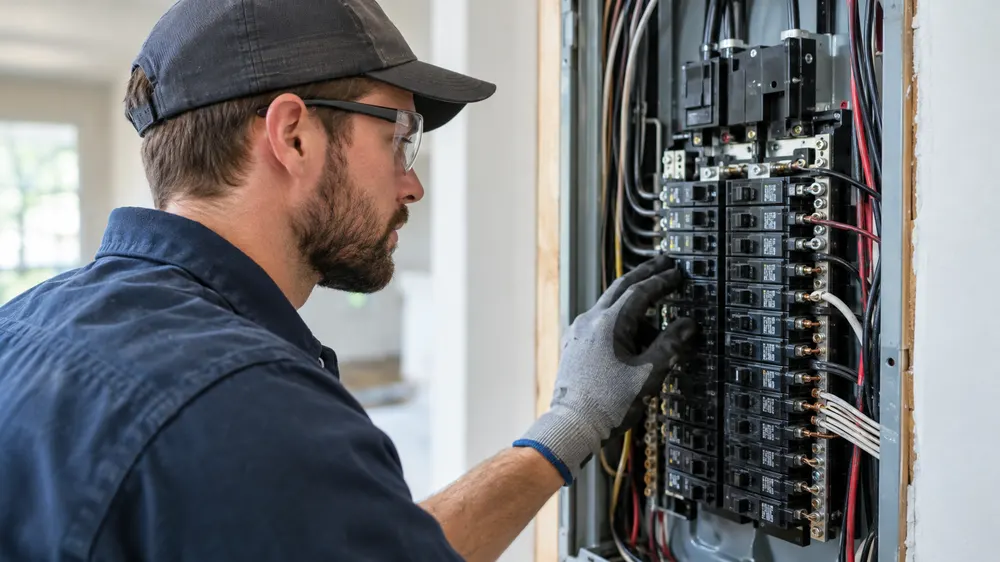
Your electrical panel is the traffic controller between the utility service and every circuit in the house. Its main breaker, usually 100, 150 or 200 amps, caps how much the home can draw at once. An EV charger asking for 40 to 48 amps continuously is one of the largest single loads a home can add, comparable to a central air conditioner or an electric range running for hours. The question is not whether the panel has an empty slot; it is whether the whole service can carry the new load on top of everything else, which is what a load calculation determines.
The worksheet an electrician uses is standardized by the electrical code. It accounts for square footage, major appliances, heating and cooling, and applies demand factors that reflect how homes actually use power. The output is a number: amps to spare. That number, not a guess, decides whether your charger circuit is a simple add or the start of a bigger project.
When a 100 amp panel works anyway
Plenty of 100 amp homes charge EVs nightly without touching the panel, and three paths make it possible. The first is simply right-sizing: a 32 amp charger on a 40 amp breaker adds about 25 miles of range per hour, which covers a long commute overnight while drawing far less than the maximum. The second is scheduling: charging from midnight to six avoids the hours when the range, dryer and air conditioning compete. The third is load management, a device that watches the home's total draw and automatically pauses or slows the charger during the rare moments everything runs at once.
Load management deserves emphasis because it has quietly transformed this trade. For a few hundred dollars installed, it lets a charger use capacity that is spare 95% of the time, and recent code cycles explicitly allow it as an alternative to upsizing the service. For many homes it is the difference between a $1,500 charger install and a $5,000 electrical project.
When the upgrade is the right call
Sometimes the honest answer is a new panel. The clearest cases: the load calculation shows real shortfall even with management; the panel is full with no room for another breaker; the equipment is old enough to raise safety questions, including certain brands with documented failure histories; or the home's plans go beyond the EV. That last point reframes the cost. A household adding induction cooking, a heat pump or a hot tub in the next few years will need the capacity regardless, and upgrading once for everything beats paying for electrical work repeatedly.
A service upgrade typically moves a home from 100 to 200 amps. The work itself is usually a day, but the calendar is set by permits and the utility, which disconnects and reconnects service on its own schedule. Expect one to three weeks end to end and costs commonly in the low-to-mid thousands depending on market and scope. Bundling the charger circuit into the same permit and visit is standard practice and saves a second mobilization.
What to ask before agreeing to an upgrade
An upgrade quote should survive a few direct questions. Did you run a load calculation, and can I see it? Have you priced load management as an alternative? Does the quote include the permit, the inspection and utility coordination? Is the charger circuit included in the package? Contractors comfortable with these questions are the ones to hire; a quote that jumps to replacement without the worksheet is solving the contractor's revenue problem, not your capacity problem.
Working with an independent electrician
evchargerinstallation.org is a referral service, not a contractor. When you call, we connect you with an independent electrician who serves your area and handles EV charger installation regularly. The contractor inspects your setup, provides a written estimate, pulls the permit where required, completes the work and stands behind it. You pay the contractor directly at a price they set, and the written estimate is the number to rely on. Our role is the first step: making sure one phone call reaches someone local and experienced.
What to have ready when you call
A few details make the first conversation productive. Your ZIP code routes the call. Your vehicle's make and model determines the charging rate the circuit should target. Where you park, garage, driveway or shared lot, shapes the install type. If you know your panel's main breaker size, usually stamped 100, 150 or 200, mention it; a photo of the open panel sent later helps the electrician quote accurately. And if you have a deadline, like a vehicle delivery date, say so up front.
Common questions
Are the contractors independent?
Yes. Every electrician we refer runs an independent business. They set their own pricing, carry their own insurance and are solely responsible for their work.
Do cost figures here apply to my home?
They are rough planning ranges drawn from typical jobs. Your home's panel, wire run and local labor market decide the real number, which is why every estimate here is followed by the same advice: get it in writing from the electrician who sees your panel.
Is the federal tax credit still available?
No. The Section 30C credit for home charging equipment ended for property placed in service after June 30, 2026. State, local and utility programs may still apply and are listed on each state page.
How fast can someone come out?
Scheduling varies by market and season. In most areas an estimate visit happens within days, and the work itself within one to three weeks including permits. Vehicle delivery dates are worth mentioning when you call.
The job, step by step
Knowing the sequence removes most of the anxiety from any electrical project. It begins with the estimate visit or photo review, where the electrician examines the panel, confirms capacity with a load calculation, measures the wire route and talks through equipment options. The written estimate follows, listing the circuit size, materials, equipment, permit fees and labor so the scope is unmistakable. Once you approve, the contractor pulls the permit and schedules the work.
Install day starts with the power to the work area shut off and locked out. The new breaker lands in the panel, wire is pulled along the planned route through conduit or finished framing, and the equipment is mounted, connected and configured. Smart units join your Wi-Fi and get their scheduling set. The electrician then tests the circuit under load, verifies voltage and polarity, labels the panel and walks you through operation and basic care. The inspection closes the loop on the city or county's schedule, usually within days, and the documented, permitted circuit becomes part of the house.
After the work, a few habits protect the investment. Keep the permit record and the invoice with your home documents; insurers and future buyers both ask for them. Register the charger with the manufacturer for warranty coverage. Check the unit monthly for damage or error lights, and set the charging schedule to match your utility's cheapest hours if a time-of-use plan is available. That is the whole ownership routine for a device that will likely outlast the car it charges.
Planning checklist
Before the first call, a short list keeps everything moving. Confirm where the vehicle will park most nights and measure the rough distance to the electrical panel. Note the panel's main breaker size and whether open slots are visible. Check your utility's website for EV rates and charger rebates, since some programs require approval before installation. If you rent or answer to an association, review the approval process early, because it usually takes longer than the electrical work. Think about whether a second EV is likely in the next few years, since planning for it now is nearly free. Finally, decide on a rough budget and remember that cost figures on this site are planning ranges, not quotes.
When the electrician visits, three questions are always worth asking: what does the load calculation say, what would change the price, and is there anything you would do differently if this were your house. The answers tend to be short, specific and genuinely useful.
One call, nationwide
This site serves more than 28,000 cities across all 50 states and the District of Columbia, and the process is the same everywhere: call the number at the top of this page, share your ZIP and your vehicle, and get connected with an independent electrician in your area who handles EV charger installation. Availability varies by location, and the agent who answers will tell you straight whether there is an installer near you. In most metro and suburban areas the answer is yes, often with same-week estimate visits.
If you are still in the research stage, the state pages here collect the incentives, utility programs, registration fees and electricity rates that shape what charging costs where you live, and the city pages add local detail on housing stock and permits. When research turns into a decision, the phone number is on every page.
The bottom line
Most EV charger installation questions resolve into a short list: get the panel checked, get the scope in writing, pull the permit, and hire someone licensed who does this work every week. The technology is proven, the process is routine for a good electrician, and the result is the part of EV ownership people actually notice, a car that is always ready. When you are ready to move from reading to doing, call the number at the top of the page and we will connect you with an independent electrician near you.
The load calculation
Not every home needs a bigger panel. An electrician does a load calculation that adds up your existing loads and checks whether a charger circuit fits under the panel rating. It is a standard method, and it gives a clear answer.
Typical situations
Homes with 200 amp service often have room. Older homes with 100 amp panels, electric heat, or an electric dryer and range may be tight. Homes with solar, a heat pump or a hot tub need a closer look.
Alternatives to a full upgrade
Load management devices, smart breakers, subpanels and smart panels can all add charging without replacing the main panel. Each has tradeoffs in cost and utility approval.
Questions to ask
Ask your electrician to show the calculation so you know why they recommend one option. Ask whether the plan leaves room for a second EV later, and whether the utility needs to be involved.