 EV Charger Installation
How Much Does EV Charger Installation Cost in 2026?
What drives the cost of installing a home EV charger, with rough ranges and what to ask contractors.
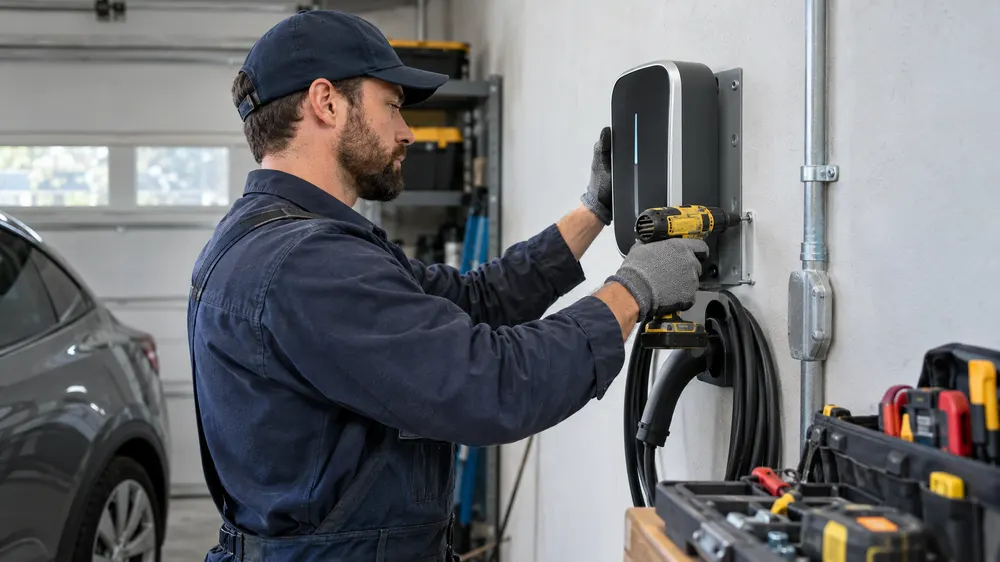
The national picture in 2026
Across the country, the price homeowners actually pay for a standard Level 2 install clusters in a familiar band: many straightforward jobs land between about $800 and $2,500 including the charger hardware. Jobs at the bottom of the band share a profile, panel in the garage, charger on the same wall, plenty of spare capacity. Jobs climb out of the band when the wire run grows, when walls and ceilings have to be opened and patched, when the panel needs work, or when the charger has to cross a yard to a detached garage. Labor rates move the whole band up or down by market; the same job costs meaningfully more in a large coastal metro than in a small midwestern city.
Two cautions about any number you read online, including this one. First, these are planning figures, not quotes; the only number that matters is the written estimate after an electrician has seen your panel. Second, very cheap quotes deserve a second look. A price far below the market usually means unpermitted work, an undersized wire, a light-duty receptacle, or no insurance behind the job.
Cost by scenario
The easy case: $500 to $1,200. Panel in or beside the garage, 200 amp service with room to spare, charger mounted within a few feet of the panel. Short wire run, minimal labor, often a half day.
The common case: $1,200 to $2,500. Panel in the basement or on the far side of the house, 30 to 60 feet of wire through finished space, some drywall work. This is where most suburban installs land.
The detached garage: add $500 to $1,500. Trenching, conduit, possibly a subpanel in the garage. Rocky soil or long distances push higher.
The panel upgrade: add $1,500 to $4,000 or more. When the service cannot carry a charger, upgrading from 100 to 200 amps is a project of its own, priced by market and by what the utility side requires. Load management, often a few hundred dollars installed, frequently avoids it.
Commercial and multifamily: priced per project, with per-port costs falling as counts rise and make-ready incentives offsetting infrastructure in participating utility territories.
What the hardware costs
The charger itself runs roughly $300 to $700 for quality Level 2 units, with basic non-networked models at the bottom and feature-rich smart chargers at the top. What the extra money buys is scheduling for cheaper overnight rates, energy tracking, power sharing between two units, longer cables and better outdoor ratings. Name brands cluster in the middle of that range, and your installer can supply the unit, often at package pricing, or install one you bought.
Beyond the charger, the materials are ordinary electrical stock: the breaker, copper wire by the foot, conduit and fittings, the receptacle for plug-in setups, and a mounting post if the charger stands alone. Wire is the one to watch on long runs; copper prices make distance the silent budget item. Permits and inspections add fees set by the city or county, typically tens to a few hundred dollars.
The electricity after the install
Once the charger is in, the running cost is pleasantly boring. At the 2025 national average residential rate of roughly 17 cents per kWh, driving on home electricity costs about $5 to $6 per 100 miles. A typical driver covering 1,000 to 1,200 miles a month adds around $55 to $70 to the electric bill, and an EV usually adds 300 to 400 kWh of monthly usage. State rates swing this widely: the same driving can cost under $40 where power is cheap and over $100 where it is expensive. Time-of-use plans are the lever; scheduling charging into the cheap overnight window can cut the per-mile cost by a third or more in markets that offer them.
Ways to keep the number down
A handful of decisions reliably save money. Mount the charger close to the panel, since wire distance is the biggest controllable cost. Choose an amperage that matches your car rather than the biggest available. Consider load management before a panel upgrade. Ask about utility rebates before work starts, because some require pre-approval, and check your state page here for programs that survived the end of the federal credits. Get two or three written estimates with identical scope so you are comparing the same job. And combine work when possible: if the house needs other electrical projects, one visit and one permit beats several.
Working with an independent electrician
evchargerinstallation.org is a referral service, not a contractor. When you call, we connect you with an independent electrician who serves your area and handles EV charger installation regularly. The contractor inspects your setup, provides a written estimate, pulls the permit where required, completes the work and stands behind it. You pay the contractor directly at a price they set, and the written estimate is the number to rely on. Our role is the first step: making sure one phone call reaches someone local and experienced.
What to have ready when you call
A few details make the first conversation productive. Your ZIP code routes the call. Your vehicle's make and model determines the charging rate the circuit should target. Where you park, garage, driveway or shared lot, shapes the install type. If you know your panel's main breaker size, usually stamped 100, 150 or 200, mention it; a photo of the open panel sent later helps the electrician quote accurately. And if you have a deadline, like a vehicle delivery date, say so up front.
Common questions
Are the contractors independent?
Yes. Every electrician we refer runs an independent business. They set their own pricing, carry their own insurance and are solely responsible for their work.
Do cost figures here apply to my home?
They are rough planning ranges drawn from typical jobs. Your home's panel, wire run and local labor market decide the real number, which is why every estimate here is followed by the same advice: get it in writing from the electrician who sees your panel.
Is the federal tax credit still available?
No. The Section 30C credit for home charging equipment ended for property placed in service after June 30, 2026. State, local and utility programs may still apply and are listed on each state page.
How fast can someone come out?
Scheduling varies by market and season. In most areas an estimate visit happens within days, and the work itself within one to three weeks including permits. Vehicle delivery dates are worth mentioning when you call.
The job, step by step
Knowing the sequence removes most of the anxiety from any electrical project. It begins with the estimate visit or photo review, where the electrician examines the panel, confirms capacity with a load calculation, measures the wire route and talks through equipment options. The written estimate follows, listing the circuit size, materials, equipment, permit fees and labor so the scope is unmistakable. Once you approve, the contractor pulls the permit and schedules the work.
Install day starts with the power to the work area shut off and locked out. The new breaker lands in the panel, wire is pulled along the planned route through conduit or finished framing, and the equipment is mounted, connected and configured. Smart units join your Wi-Fi and get their scheduling set. The electrician then tests the circuit under load, verifies voltage and polarity, labels the panel and walks you through operation and basic care. The inspection closes the loop on the city or county's schedule, usually within days, and the documented, permitted circuit becomes part of the house.
After the work, a few habits protect the investment. Keep the permit record and the invoice with your home documents; insurers and future buyers both ask for them. Register the charger with the manufacturer for warranty coverage. Check the unit monthly for damage or error lights, and set the charging schedule to match your utility's cheapest hours if a time-of-use plan is available. That is the whole ownership routine for a device that will likely outlast the car it charges.
Planning checklist
Before the first call, a short list keeps everything moving. Confirm where the vehicle will park most nights and measure the rough distance to the electrical panel. Note the panel's main breaker size and whether open slots are visible. Check your utility's website for EV rates and charger rebates, since some programs require approval before installation. If you rent or answer to an association, review the approval process early, because it usually takes longer than the electrical work. Think about whether a second EV is likely in the next few years, since planning for it now is nearly free. Finally, decide on a rough budget and remember that cost figures on this site are planning ranges, not quotes.
When the electrician visits, three questions are always worth asking: what does the load calculation say, what would change the price, and is there anything you would do differently if this were your house. The answers tend to be short, specific and genuinely useful.
One call, nationwide
This site serves more than 28,000 cities across all 50 states and the District of Columbia, and the process is the same everywhere: call the number at the top of this page, share your ZIP and your vehicle, and get connected with an independent electrician in your area who handles EV charger installation. Availability varies by location, and the agent who answers will tell you straight whether there is an installer near you. In most metro and suburban areas the answer is yes, often with same-week estimate visits.
If you are still in the research stage, the state pages here collect the incentives, utility programs, registration fees and electricity rates that shape what charging costs where you live, and the city pages add local detail on housing stock and permits. When research turns into a decision, the phone number is on every page.
The bottom line
Most EV charger installation questions resolve into a short list: get the panel checked, get the scope in writing, pull the permit, and hire someone licensed who does this work every week. The technology is proven, the process is routine for a good electrician, and the result is the part of EV ownership people actually notice, a car that is always ready. When you are ready to move from reading to doing, call the number at the top of the page and we will connect you with an independent electrician near you.
The short answer
Installing a home EV charger is not a single price. As a rough guide, many straightforward Level 2 installs fall between about $800 and $2,500 including the charger. A short run in a newer home sits at the low end. A long run, trenching or a panel upgrade pushes it higher. These are estimates, not quotes.
What drives the cost
Distance from the panel. Wire and labor grow with every foot between the panel and the charger. A garage that shares a wall with the panel is the cheapest case. A detached garage or a driveway post can add trenching.
Panel capacity. If your panel has room, the electrician adds a breaker. If it does not, you may need a load management device, a subpanel or a full upgrade, which is the biggest cost swing.
The charger. Basic Level 2 units often cost a few hundred dollars. Models with large cables, extra features or outdoor ratings cost more.
Permits and inspection. Fees vary by city and county and are usually a small part of the total.
Finished surfaces. Running wire through finished walls, ceilings or concrete takes longer than an open garage.
How to compare estimates
Ask each contractor for an itemized estimate that lists the circuit, the charger, the permit and any panel work. Ask who pulls the permit and who schedules the inspection. Be careful with a price that is far below the others, since it may skip the permit or the load calculation.
Ways to lower the bill
Park near the panel if you have a choice. Pick a charger amperage that matches your car instead of the largest available. Check your utility for rebates and time-of-use rates. Offers change often, so confirm what is open before you buy.