 EV Charger Installation
How to Choose an EV Charger Installer
Questions to ask before hiring an electrician for an EV charger.
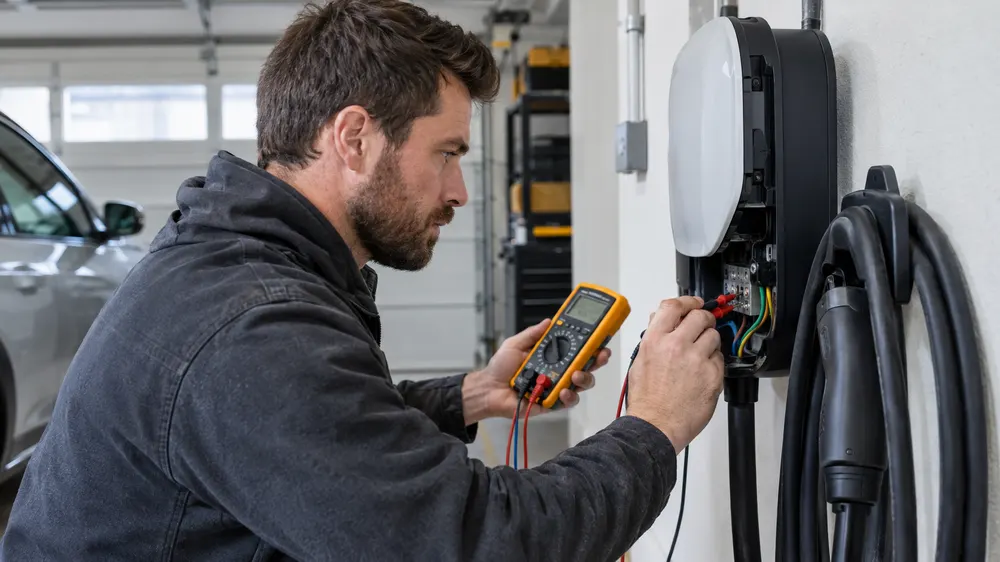
Start with licensing and insurance
EV charger installation is electrical work, and in nearly every state that means a licensed electrician, not a handyman. Licensing is checkable: every state maintains a lookup, and a legitimate contractor gives you the number without being asked twice. Insurance matters just as much. General liability covers damage to your home during the job; workers' compensation covers injuries on your property. Ask for certificates, and be wary of any hesitation, because an uninsured worker injured in your garage can become your problem.
Permits double as a licensing filter. A contractor who insists on pulling permits is telling you two good things: they are licensed to pull them, and their work will survive an inspector. A contractor who suggests skipping the permit to save money is offering you savings that become very expensive at the next insurance claim or home sale.
Look for EV-specific experience
Any competent electrician can install a 240-volt circuit. What EV experience adds is judgment: sizing the circuit to the vehicle instead of overselling amperage, knowing when load management beats a panel upgrade, placing the charger so the cable actually reaches, commissioning smart features correctly, and knowing the local utility's rebate programs and whether they require pre-approval. An installer who does chargers weekly has also seen your exact house type before and prices it accurately.
Easy tells separate specialists from generalists. They ask what vehicle you drive before quoting amperage. They mention the load calculation unprompted. They know your utility's EV rate plans. They talk about cable management and future-proofing for a second EV. And their estimate names the equipment, breaker size and wire run specifically rather than quoting a flat number for "EV charger install."
Compare estimates the right way
Two or three written estimates is the standard advice, and the trick is making them comparable. Give each contractor the same scope: same charger or outlet, same location, same amperage target. Then read what each quote includes. Permit and inspection fees should appear. Drywall patching should be explicit if the run crosses finished walls. The equipment should be named with model numbers. Warranty terms should be stated for both parts and labor.
Be suspicious of extremes. The lowest bid often omits the permit, specs light-duty materials, or comes from someone between licenses. The highest sometimes prices a panel upgrade you do not need. The middle bid from the contractor who asked the best questions is usually the right one, because an accurate estimate reflects an accurate understanding of the job.
Red flags and green flags
Walk away from: no license number or an unverifiable one; suggestions to skip permits; cash-only pricing; pressure to decide today; quotes given without seeing the panel or at least photos of it; no written estimate; vague answers about insurance.
Move forward with: a license that checks out; a site visit or photo review before quoting; a load calculation mentioned early; written, itemized estimates; familiarity with your vehicle and your utility's programs; clear warranty terms; and a schedule that includes the inspection. Reviews help at the margin, but the estimate conversation tells you more in five minutes than fifty reviews do.
One last filter is availability. Good EV installers are busy, but they communicate a real schedule and hit it. A contractor who can start tomorrow in a market where everyone else books two weeks out deserves the same scrutiny as a suspiciously low bid: sometimes it is honest availability, and sometimes it tells you why the calendar is empty. Trust the pattern, not any single signal, and take the extra day to verify before signing anything.
Working with an independent electrician
evchargerinstallation.org is a referral service, not a contractor. When you call, we connect you with an independent electrician who serves your area and handles EV charger installation regularly. The contractor inspects your setup, provides a written estimate, pulls the permit where required, completes the work and stands behind it. You pay the contractor directly at a price they set, and the written estimate is the number to rely on. Our role is the first step: making sure one phone call reaches someone local and experienced.
What to have ready when you call
A few details make the first conversation productive. Your ZIP code routes the call. Your vehicle's make and model determines the charging rate the circuit should target. Where you park, garage, driveway or shared lot, shapes the install type. If you know your panel's main breaker size, usually stamped 100, 150 or 200, mention it; a photo of the open panel sent later helps the electrician quote accurately. And if you have a deadline, like a vehicle delivery date, say so up front.
Common questions
Are the contractors independent?
Yes. Every electrician we refer runs an independent business. They set their own pricing, carry their own insurance and are solely responsible for their work.
Do cost figures here apply to my home?
They are rough planning ranges drawn from typical jobs. Your home's panel, wire run and local labor market decide the real number, which is why every estimate here is followed by the same advice: get it in writing from the electrician who sees your panel.
Is the federal tax credit still available?
No. The Section 30C credit for home charging equipment ended for property placed in service after June 30, 2026. State, local and utility programs may still apply and are listed on each state page.
How fast can someone come out?
Scheduling varies by market and season. In most areas an estimate visit happens within days, and the work itself within one to three weeks including permits. Vehicle delivery dates are worth mentioning when you call.
The job, step by step
Knowing the sequence removes most of the anxiety from any electrical project. It begins with the estimate visit or photo review, where the electrician examines the panel, confirms capacity with a load calculation, measures the wire route and talks through equipment options. The written estimate follows, listing the circuit size, materials, equipment, permit fees and labor so the scope is unmistakable. Once you approve, the contractor pulls the permit and schedules the work.
Install day starts with the power to the work area shut off and locked out. The new breaker lands in the panel, wire is pulled along the planned route through conduit or finished framing, and the equipment is mounted, connected and configured. Smart units join your Wi-Fi and get their scheduling set. The electrician then tests the circuit under load, verifies voltage and polarity, labels the panel and walks you through operation and basic care. The inspection closes the loop on the city or county's schedule, usually within days, and the documented, permitted circuit becomes part of the house.
After the work, a few habits protect the investment. Keep the permit record and the invoice with your home documents; insurers and future buyers both ask for them. Register the charger with the manufacturer for warranty coverage. Check the unit monthly for damage or error lights, and set the charging schedule to match your utility's cheapest hours if a time-of-use plan is available. That is the whole ownership routine for a device that will likely outlast the car it charges.
Planning checklist
Before the first call, a short list keeps everything moving. Confirm where the vehicle will park most nights and measure the rough distance to the electrical panel. Note the panel's main breaker size and whether open slots are visible. Check your utility's website for EV rates and charger rebates, since some programs require approval before installation. If you rent or answer to an association, review the approval process early, because it usually takes longer than the electrical work. Think about whether a second EV is likely in the next few years, since planning for it now is nearly free. Finally, decide on a rough budget and remember that cost figures on this site are planning ranges, not quotes.
When the electrician visits, three questions are always worth asking: what does the load calculation say, what would change the price, and is there anything you would do differently if this were your house. The answers tend to be short, specific and genuinely useful.
One call, nationwide
This site serves more than 28,000 cities across all 50 states and the District of Columbia, and the process is the same everywhere: call the number at the top of this page, share your ZIP and your vehicle, and get connected with an independent electrician in your area who handles EV charger installation. Availability varies by location, and the agent who answers will tell you straight whether there is an installer near you. In most metro and suburban areas the answer is yes, often with same-week estimate visits.
If you are still in the research stage, the state pages here collect the incentives, utility programs, registration fees and electricity rates that shape what charging costs where you live, and the city pages add local detail on housing stock and permits. When research turns into a decision, the phone number is on every page.
The bottom line
Most EV charger installation questions resolve into a short list: get the panel checked, get the scope in writing, pull the permit, and hire someone licensed who does this work every week. The technology is proven, the process is routine for a good electrician, and the result is the part of EV ownership people actually notice, a car that is always ready. When you are ready to move from reading to doing, call the number at the top of the page and we will connect you with an independent electrician near you.
Start with the license
Hire a licensed electrician. Ask for the license number and check it with your state licensing board. Ask whether they carry liability insurance.
Questions to ask
Who pulls the permit, and who schedules the inspection? What does the labor warranty cover, and for how long? Which charger do they recommend, and why? Have they installed chargers for your type of car and panel before?
Comparing estimates
Get at least two itemized estimates. Be careful with quotes that are far below the others or that skip the permit. Written estimates should list the circuit, the charger, the permit and any panel work.
About this service
This site is a referral service. It connects you with independent local contractors and does not do the work itself, so you choose who to hire.