 EV Charger Installation
Level 1 vs Level 2 vs DC Fast Charging
The three charging levels, how fast each adds range, and which one fits home, work and road trips.
Level 1: the outlet you already have
Level 1 is charging from a standard 120-volt household outlet, the same one that powers a lamp. Every EV supports it, and the cable usually comes with the car. The output is modest: about 3 to 5 miles of range per hour, or 40 to 60 miles from an overnight session. For a driver with a short, predictable commute and a garage outlet within reach, Level 1 can genuinely work, and plenty of plug-in hybrid owners never need more.
The limits show up fast in real life. A 60-mile day puts a Level 1 driver behind, and cold weather, which slows charging and cuts range, turns a marginal setup into a frustrating one. There is also a safety note: an outlet used nightly for hours of continuous draw should be in good condition and on a healthy circuit, and an electrician can confirm that in minutes. Level 1 is best understood as the included backup plan, fine for light use, not a foundation.
Level 2: the home upgrade
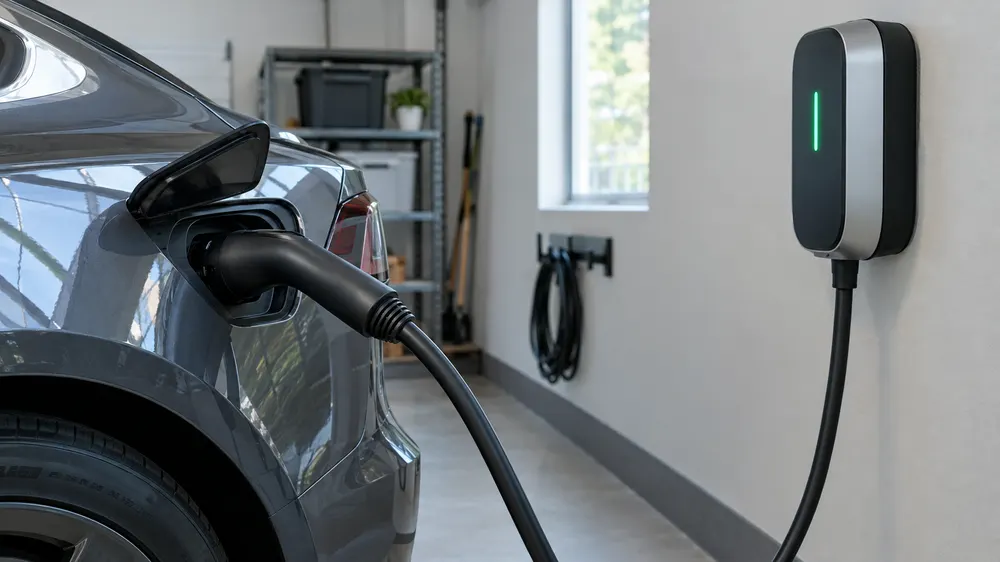
Level 2 runs on a dedicated 240-volt circuit and delivers roughly 20 to 40 miles of range per hour depending on amperage and the vehicle. This is the charging that changes ownership: plug in when you park, and the car is full every morning regardless of how far you drove. Even the largest EV batteries refill overnight, and most drivers use only a few hours of the night.
The install is standard electrical work, a breaker, a wire run and the charger or outlet, and it is what most of this site is about. Costs typically land between $800 and $2,500 installed for straightforward jobs. Level 2 is also the right answer for workplaces and apartments, where cars park for hours and modest power serves many vehicles across a day. If you charge at one level for the rest of your EV's life, it should be this one.
DC fast: power for the road
DC fast charging skips the car's onboard charger entirely and feeds the battery high-voltage direct current, adding a large share of range in 20 to 40 minutes at modern stations. It exists for two jobs: road trips and drivers without reliable home or workplace charging. For everyone else it is an occasional convenience, not a lifestyle, for three reasons. It costs several times more per kWh than home electricity, often rivaling gasoline per mile. Frequent fast charging is harder on battery health over years. And it depends on station availability and reliability, which home charging never does.
You will also hear DC fast called Level 3, though the industry prefers the DC name. The practical advice: plan road trips around it, use it without guilt when traveling, and do not build your weekly routine on it if you can charge at home.
The math for a real week
Take a driver covering 250 miles a week, about 35 miles a day. On Level 1, an overnight session barely keeps pace, and a single busy Saturday creates a deficit that takes days to recover. On Level 2 at 32 amps, the same week needs about two and a half hours of charging per day, invisible inside an overnight park. On DC fast, the week is one 20-minute stop, at three or four times the home electricity price, every week, forever.
Now scale the driver: 500 miles a week makes Level 1 untenable and Level 2 a four-to-five-hour nightly session, still trivial. Two EVs in the household make the case stronger again, since one Level 2 circuit with power sharing covers both cars overnight. The pattern holds at nearly every usage level: Level 2 at home is the quiet workhorse, Level 1 is the spare tire, and DC fast is the highway amenity.
Choosing your setup
The decision rarely needs more than three questions. How many miles do you drive on your longest typical day? If the answer is under 40 and you are patient, Level 1 may suffice for now. Do you park in the same place nightly with the ability to add a circuit? If yes, Level 2 will pay for itself in convenience within a month. And what does your vehicle accept? Match the charger to the car's onboard limit. When in doubt, install for the car you will own next: a 40 to 50 amp circuit is cheap insurance against the future.
Working with an independent electrician
evchargerinstallation.org is a referral service, not a contractor. When you call, we connect you with an independent electrician who serves your area and handles EV charger installation regularly. The contractor inspects your setup, provides a written estimate, pulls the permit where required, completes the work and stands behind it. You pay the contractor directly at a price they set, and the written estimate is the number to rely on. Our role is the first step: making sure one phone call reaches someone local and experienced.
What to have ready when you call
A few details make the first conversation productive. Your ZIP code routes the call. Your vehicle's make and model determines the charging rate the circuit should target. Where you park, garage, driveway or shared lot, shapes the install type. If you know your panel's main breaker size, usually stamped 100, 150 or 200, mention it; a photo of the open panel sent later helps the electrician quote accurately. And if you have a deadline, like a vehicle delivery date, say so up front.
Common questions
Are the contractors independent?
Yes. Every electrician we refer runs an independent business. They set their own pricing, carry their own insurance and are solely responsible for their work.
Do cost figures here apply to my home?
They are rough planning ranges drawn from typical jobs. Your home's panel, wire run and local labor market decide the real number, which is why every estimate here is followed by the same advice: get it in writing from the electrician who sees your panel.
Is the federal tax credit still available?
No. The Section 30C credit for home charging equipment ended for property placed in service after June 30, 2026. State, local and utility programs may still apply and are listed on each state page.
How fast can someone come out?
Scheduling varies by market and season. In most areas an estimate visit happens within days, and the work itself within one to three weeks including permits. Vehicle delivery dates are worth mentioning when you call.
The job, step by step
Knowing the sequence removes most of the anxiety from any electrical project. It begins with the estimate visit or photo review, where the electrician examines the panel, confirms capacity with a load calculation, measures the wire route and talks through equipment options. The written estimate follows, listing the circuit size, materials, equipment, permit fees and labor so the scope is unmistakable. Once you approve, the contractor pulls the permit and schedules the work.
Install day starts with the power to the work area shut off and locked out. The new breaker lands in the panel, wire is pulled along the planned route through conduit or finished framing, and the equipment is mounted, connected and configured. Smart units join your Wi-Fi and get their scheduling set. The electrician then tests the circuit under load, verifies voltage and polarity, labels the panel and walks you through operation and basic care. The inspection closes the loop on the city or county's schedule, usually within days, and the documented, permitted circuit becomes part of the house.
After the work, a few habits protect the investment. Keep the permit record and the invoice with your home documents; insurers and future buyers both ask for them. Register the charger with the manufacturer for warranty coverage. Check the unit monthly for damage or error lights, and set the charging schedule to match your utility's cheapest hours if a time-of-use plan is available. That is the whole ownership routine for a device that will likely outlast the car it charges.
Planning checklist
Before the first call, a short list keeps everything moving. Confirm where the vehicle will park most nights and measure the rough distance to the electrical panel. Note the panel's main breaker size and whether open slots are visible. Check your utility's website for EV rates and charger rebates, since some programs require approval before installation. If you rent or answer to an association, review the approval process early, because it usually takes longer than the electrical work. Think about whether a second EV is likely in the next few years, since planning for it now is nearly free. Finally, decide on a rough budget and remember that cost figures on this site are planning ranges, not quotes.
When the electrician visits, three questions are always worth asking: what does the load calculation say, what would change the price, and is there anything you would do differently if this were your house. The answers tend to be short, specific and genuinely useful.
One call, nationwide
This site serves more than 28,000 cities across all 50 states and the District of Columbia, and the process is the same everywhere: call the number at the top of this page, share your ZIP and your vehicle, and get connected with an independent electrician in your area who handles EV charger installation. Availability varies by location, and the agent who answers will tell you straight whether there is an installer near you. In most metro and suburban areas the answer is yes, often with same-week estimate visits.
If you are still in the research stage, the state pages here collect the incentives, utility programs, registration fees and electricity rates that shape what charging costs where you live, and the city pages add local detail on housing stock and permits. When research turns into a decision, the phone number is on every page.
The bottom line
Most EV charger installation questions resolve into a short list: get the panel checked, get the scope in writing, pull the permit, and hire someone licensed who does this work every week. The technology is proven, the process is routine for a good electrician, and the result is the part of EV ownership people actually notice, a car that is always ready. When you are ready to move from reading to doing, call the number at the top of the page and we will connect you with an independent electrician near you.
Level 1: the wall outlet
Level 1 uses a standard 120-volt outlet and adds roughly 3 to 5 miles of range per hour. It works for short daily drives and for plug-hybrids, and it needs no installation. For most all-electric drivers it is too slow as the only option.
Level 2: the home standard
Level 2 uses a 240-volt circuit and adds roughly 20 to 40 miles per hour depending on the charger and car. It is the standard for homes, workplaces and apartment lots. A full overnight charge is normal. It requires a dedicated circuit, which is why people hire an electrician.
DC fast charging: the road trip tool
DC fast charging uses high-power equipment at public sites. It can add a large share of range in 20 to 40 minutes. It is not practical to install at home because of the power and cost involved. Frequent fast charging can also be harder on the battery than slow charging.
Which one do you need?
For most drivers, Level 2 at home covers daily needs, and DC fast charging fills in on trips. If you cannot install at home, look at workplace charging or a nearby public Level 2 station.