 EV Charger Installation
EV Charger Permits and Inspections: What to Expect
Why most EV charger installs need a permit and how inspections usually work.
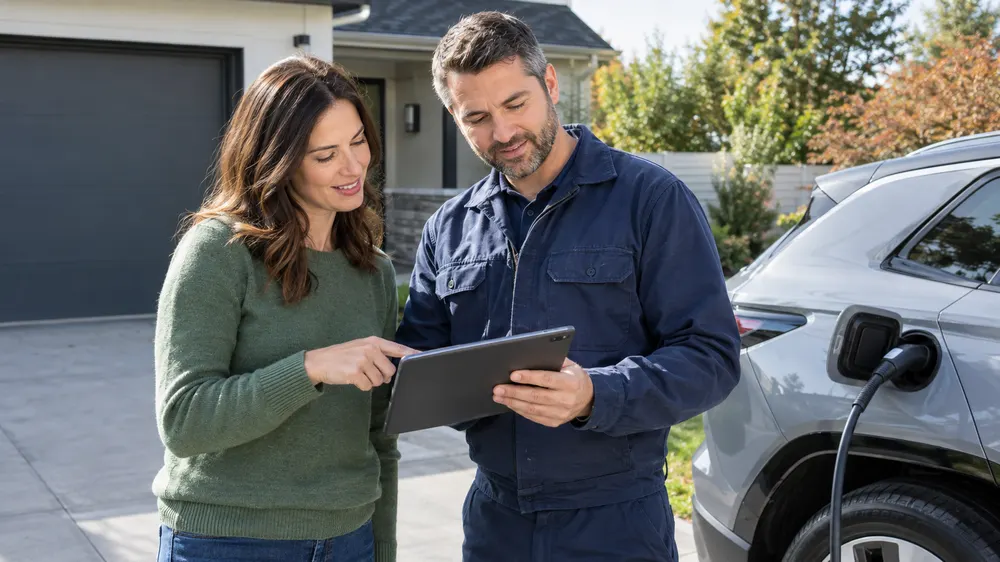
Why this work is permitted
An EV charger circuit is one of the heaviest continuous loads in a home, drawing high current for hours every night. That profile is exactly what electrical codes and inspections exist to keep safe: wire that is sized right, connections that stay cool, protection that trips before a fault becomes a fire. The permit is not bureaucracy for its own sake; it creates the inspection that verifies the work, the record your insurer wants after a claim, and the documentation a buyer's inspector will ask about when you sell.
Unpermitted work carries real consequences beyond safety. Insurance companies can and do deny claims traced to unpermitted electrical work. Home sales stumble when an inspector flags a circuit with no permit record. And in many jurisdictions the homeowner, not just the contractor, can be cited for work done without a permit. The permit fee is typically tens to a few hundred dollars, a rounding error against those risks.
What the inspector checks
EV circuit inspections are routine and quick, usually under half an hour. The inspector verifies the breaker matches the wire size and the wire matches the load; that GFCI protection is present where the code requires it, which now includes most garage and outdoor installations; that the charger is listed equipment mounted correctly; that outdoor work uses weather-rated boxes, covers and conduit; and that the panel is labeled. Where load management substitutes for a bigger service, the inspector confirms the device is installed and configured as designed.
The standards underneath are the National Electrical Code as adopted by your state or city, often with local amendments. Article 625 covers EV supply equipment specifically; other articles govern wiring methods, grounding and outdoor work. Code cycles update every three years and states adopt them on their own schedules, which is why a neighbor's install from five years ago may differ from what your electrician quotes today.
Who handles it, and how long it takes
In nearly every case the installing electrician pulls the permit as part of the job; it belongs in the written estimate. The electrician schedules the inspection and meets the inspector if required. Your part is minimal: access to the panel and the install location.
Timing varies enormously by jurisdiction. Some cities issue EV circuit permits over the counter or online the same day, and a growing number have created streamlined EV-specific permit paths. Others take a week or two. Inspections typically happen within days of the request. The realistic planning figure for the whole permitting arc is a few days to a few weeks, which is why starting the process before the car arrives is the standard advice. One more nuance: condos and HOAs add their own approval layer on top of the city permit, and that layer is often the slower one.
Fees deserve a word too. Most residential EV permits cost tens to a few hundred dollars, set by the local fee schedule and sometimes scaled to the project value. The fee appears on the contractor's estimate as a pass-through, and it is money well spent: it buys the inspection, the record and the peace of mind that the work is documented.
Common requirements by project type
Garage wall charger, panel nearby: the simplest permit, often same-day in EV-friendly cities.
Outdoor or driveway installs: adds weather-rating and GFCI requirements, sometimes a separate trenching permit for detached structures.
Panel upgrades: their own permit and inspection, with utility coordination for the service disconnect.
Multifamily and commercial: fuller plan review, sometimes including load studies and, for public-facing chargers, accessibility requirements.
In every case, the contractor who does EV work weekly knows the local office's current quirks, and that familiarity is worth as much as the wire in the wall.
Working with an independent electrician
evchargerinstallation.org is a referral service, not a contractor. When you call, we connect you with an independent electrician who serves your area and handles EV charger installation regularly. The contractor inspects your setup, provides a written estimate, pulls the permit where required, completes the work and stands behind it. You pay the contractor directly at a price they set, and the written estimate is the number to rely on. Our role is the first step: making sure one phone call reaches someone local and experienced.
What to have ready when you call
A few details make the first conversation productive. Your ZIP code routes the call. Your vehicle's make and model determines the charging rate the circuit should target. Where you park, garage, driveway or shared lot, shapes the install type. If you know your panel's main breaker size, usually stamped 100, 150 or 200, mention it; a photo of the open panel sent later helps the electrician quote accurately. And if you have a deadline, like a vehicle delivery date, say so up front.
Common questions
Are the contractors independent?
Yes. Every electrician we refer runs an independent business. They set their own pricing, carry their own insurance and are solely responsible for their work.
Do cost figures here apply to my home?
They are rough planning ranges drawn from typical jobs. Your home's panel, wire run and local labor market decide the real number, which is why every estimate here is followed by the same advice: get it in writing from the electrician who sees your panel.
Is the federal tax credit still available?
No. The Section 30C credit for home charging equipment ended for property placed in service after June 30, 2026. State, local and utility programs may still apply and are listed on each state page.
How fast can someone come out?
Scheduling varies by market and season. In most areas an estimate visit happens within days, and the work itself within one to three weeks including permits. Vehicle delivery dates are worth mentioning when you call.
The job, step by step
Knowing the sequence removes most of the anxiety from any electrical project. It begins with the estimate visit or photo review, where the electrician examines the panel, confirms capacity with a load calculation, measures the wire route and talks through equipment options. The written estimate follows, listing the circuit size, materials, equipment, permit fees and labor so the scope is unmistakable. Once you approve, the contractor pulls the permit and schedules the work.
Install day starts with the power to the work area shut off and locked out. The new breaker lands in the panel, wire is pulled along the planned route through conduit or finished framing, and the equipment is mounted, connected and configured. Smart units join your Wi-Fi and get their scheduling set. The electrician then tests the circuit under load, verifies voltage and polarity, labels the panel and walks you through operation and basic care. The inspection closes the loop on the city or county's schedule, usually within days, and the documented, permitted circuit becomes part of the house.
After the work, a few habits protect the investment. Keep the permit record and the invoice with your home documents; insurers and future buyers both ask for them. Register the charger with the manufacturer for warranty coverage. Check the unit monthly for damage or error lights, and set the charging schedule to match your utility's cheapest hours if a time-of-use plan is available. That is the whole ownership routine for a device that will likely outlast the car it charges.
Planning checklist
Before the first call, a short list keeps everything moving. Confirm where the vehicle will park most nights and measure the rough distance to the electrical panel. Note the panel's main breaker size and whether open slots are visible. Check your utility's website for EV rates and charger rebates, since some programs require approval before installation. If you rent or answer to an association, review the approval process early, because it usually takes longer than the electrical work. Think about whether a second EV is likely in the next few years, since planning for it now is nearly free. Finally, decide on a rough budget and remember that cost figures on this site are planning ranges, not quotes.
When the electrician visits, three questions are always worth asking: what does the load calculation say, what would change the price, and is there anything you would do differently if this were your house. The answers tend to be short, specific and genuinely useful.
One call, nationwide
This site serves more than 28,000 cities across all 50 states and the District of Columbia, and the process is the same everywhere: call the number at the top of this page, share your ZIP and your vehicle, and get connected with an independent electrician in your area who handles EV charger installation. Availability varies by location, and the agent who answers will tell you straight whether there is an installer near you. In most metro and suburban areas the answer is yes, often with same-week estimate visits.
If you are still in the research stage, the state pages here collect the incentives, utility programs, registration fees and electricity rates that shape what charging costs where you live, and the city pages add local detail on housing stock and permits. When research turns into a decision, the phone number is on every page.
The bottom line
Most EV charger installation questions resolve into a short list: get the panel checked, get the scope in writing, pull the permit, and hire someone licensed who does this work every week. The technology is proven, the process is routine for a good electrician, and the result is the part of EV ownership people actually notice, a car that is always ready. When you are ready to move from reading to doing, call the number at the top of the page and we will connect you with an independent electrician near you.
Why permits exist
Most jurisdictions require an electrical permit for a new 240-volt circuit. The permit lets the local building department inspect the work for safety. It protects you, your home and the next owner.
How the process works
Your electrician typically pulls the permit and schedules the inspection. After the inspection passes, the work is signed off. Timing varies. Some cities approve online the same day, others take longer.
What an inspector looks at
Inspectors check breaker and wire sizing, grounding, the mounting and weather protection, and that the equipment is listed by a recognized testing lab. Installations follow the National Electrical Code, including Article 625 for EV charging.
Risks of skipping the permit
Skipping a permit can cause problems with insurance claims and when you sell the home. Rules differ by city and county, so ask your contractor what applies locally.